Kayaking Tomales Bay in search of bioluminescence
(See also: my planning notes.)
Tomales Bay is one of the best places in California to kayak through bioluminescent plankton, but you can only see it if three things align: it has to be dark enough (moon below the horizon), late enough (after full darkness), and the right season (late spring through fall when dinoflagellate populations peak). This is the story of my first attempt, on September 23–24, 2022. (Spoiler: the second attempt went better.) If you're planning your own trip, my Tomales Bay planning notes collect launch points, campsites, wind, tides, a gear checklist, and a night planner.
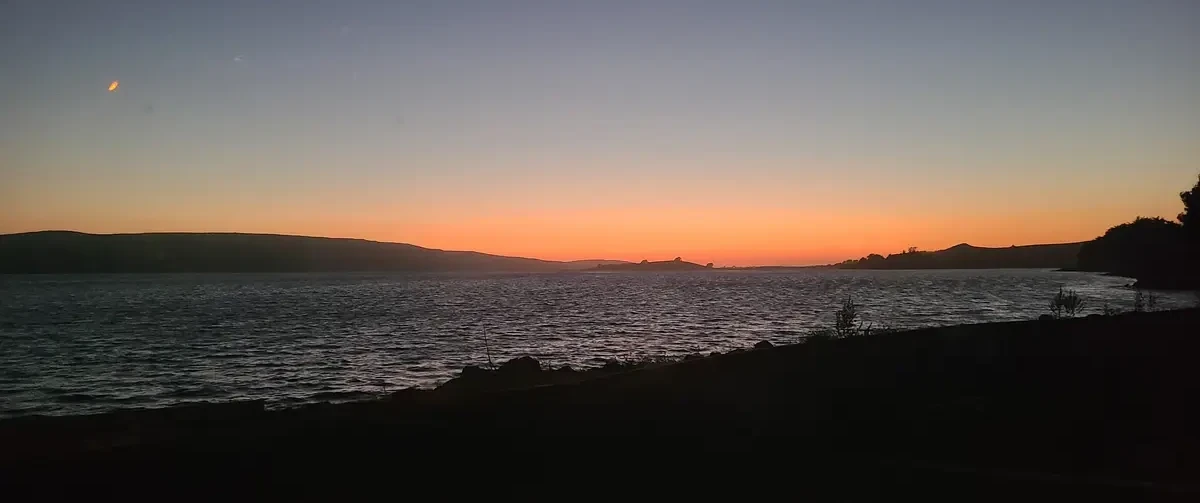
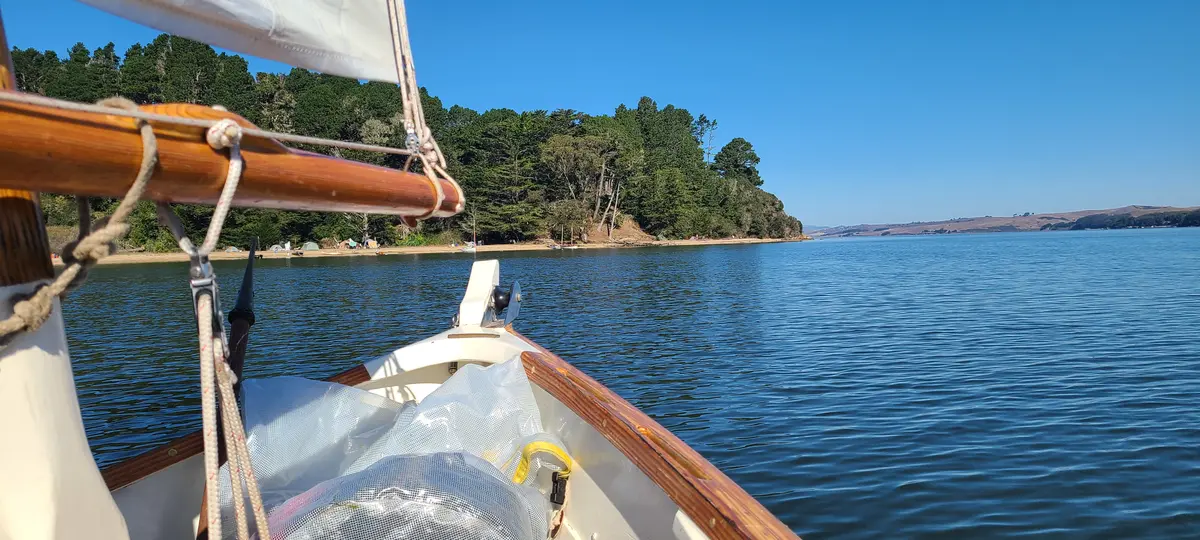
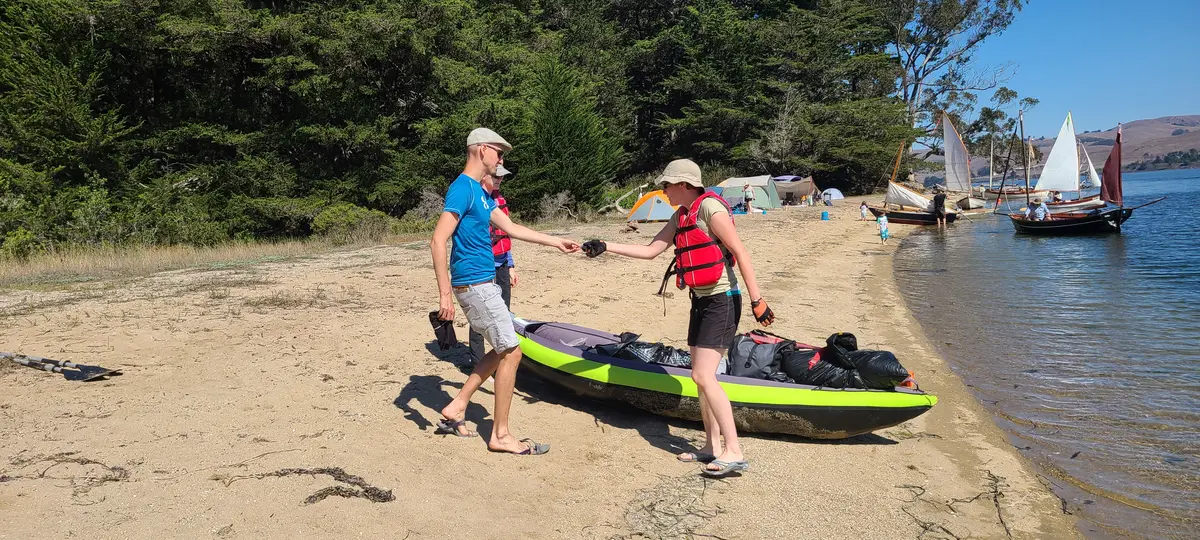
We reserved Boat Site B at Point Reyes National Seashore Campground, a group site on the west shore of Tomales Bay at Marshall Beach, accessible only by water.
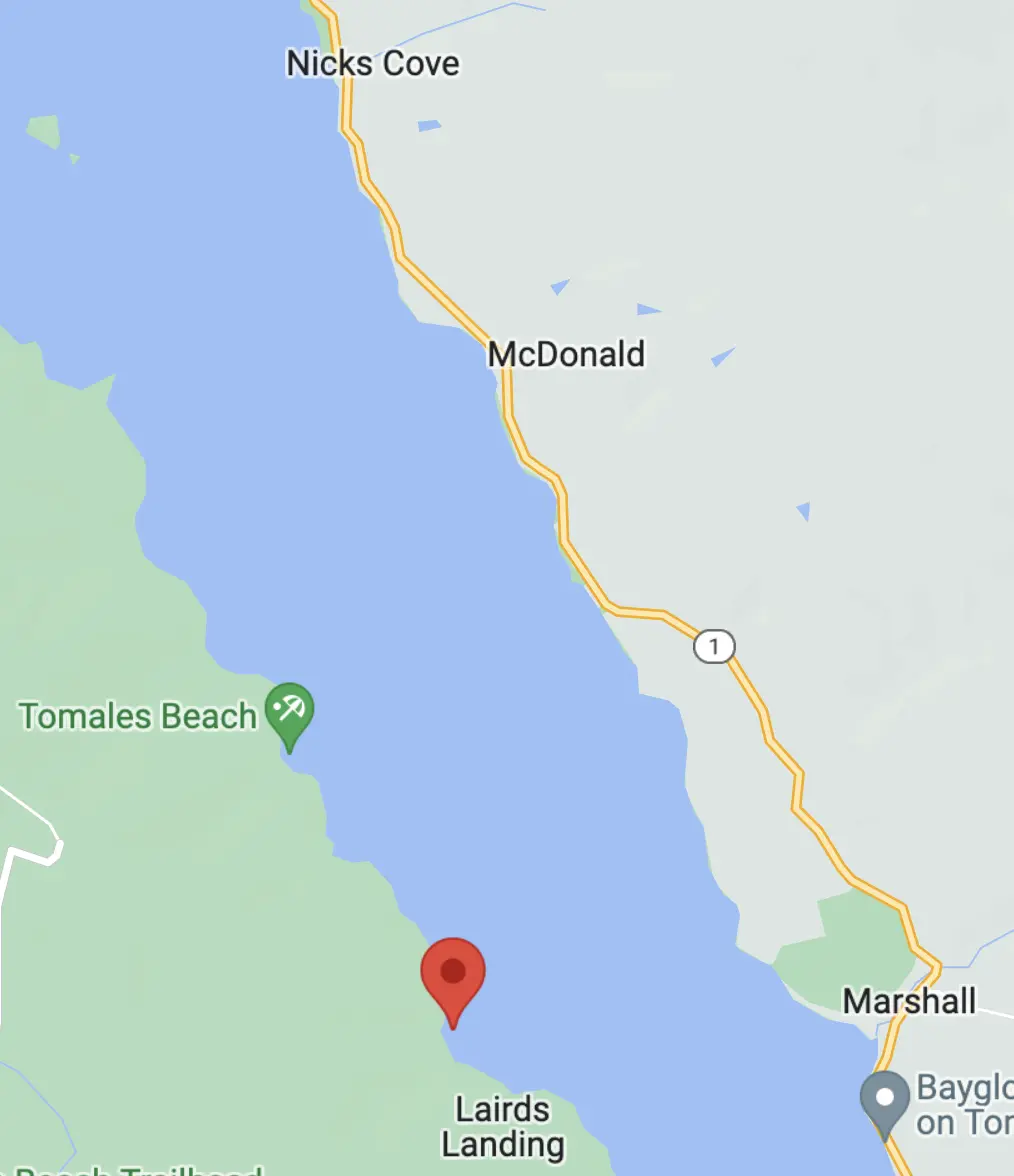
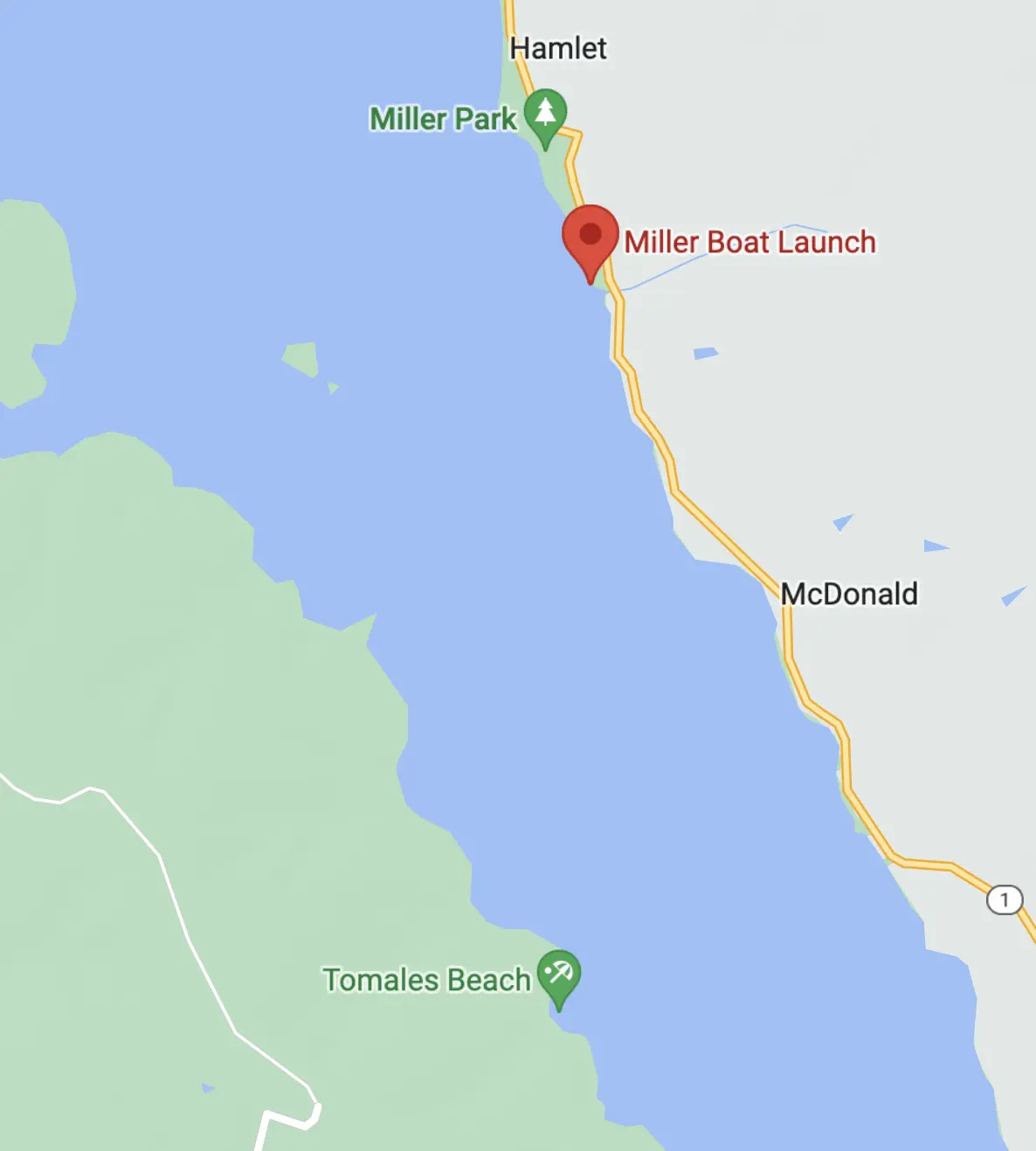
The original plan was to park overnight at, and launch from, Miller Boat Launch on the east shore and paddle across to camp.
Straight-line, the route is about 1.78 miles.
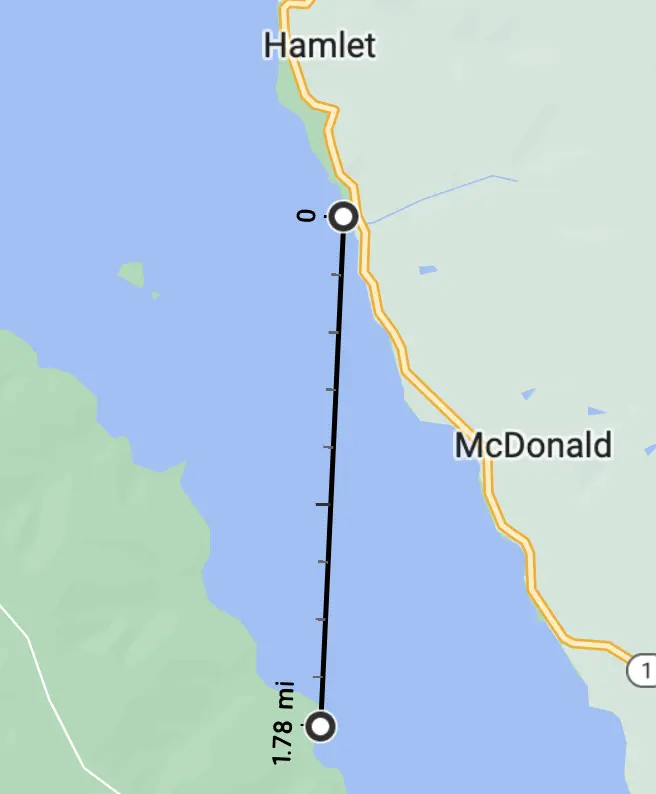
By timing the crossing for slack tide, though, we could have cut straight across the Bay — only about 4,500 feet — and then head southeast along the shore to the camp site. This would have minimized exposure to open water risks.
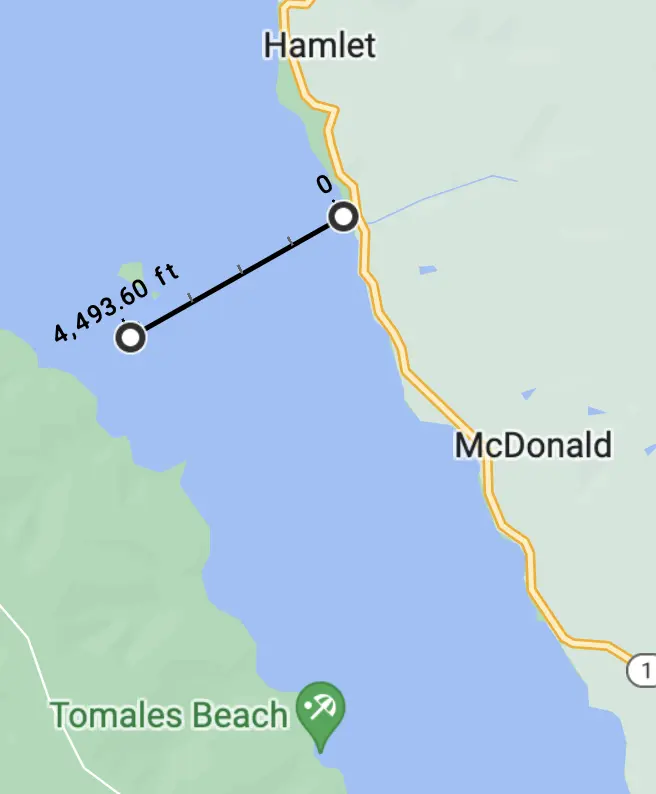
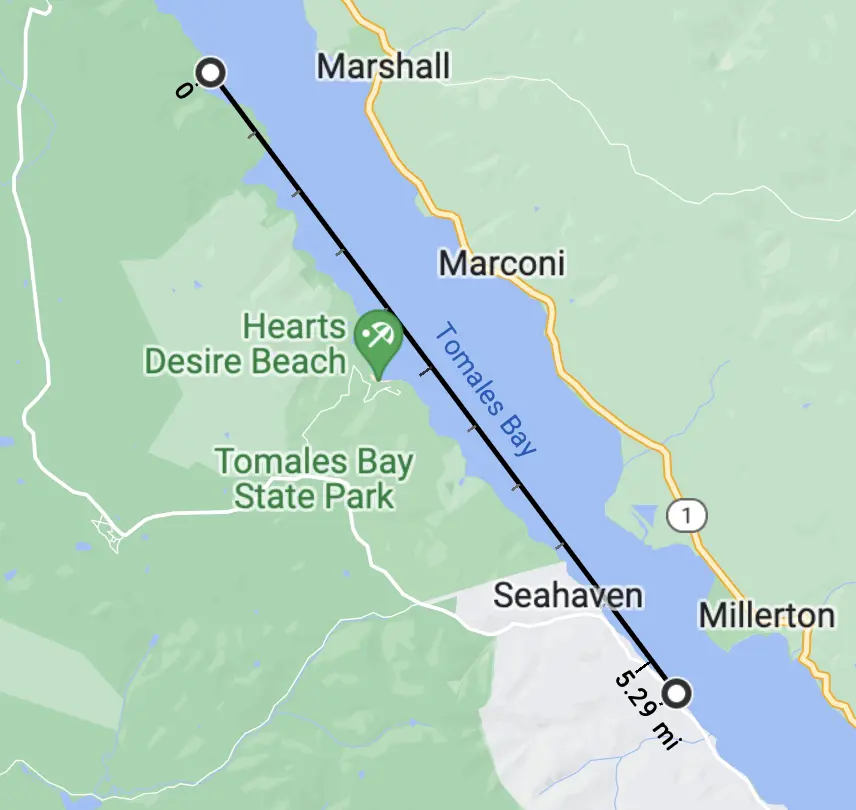
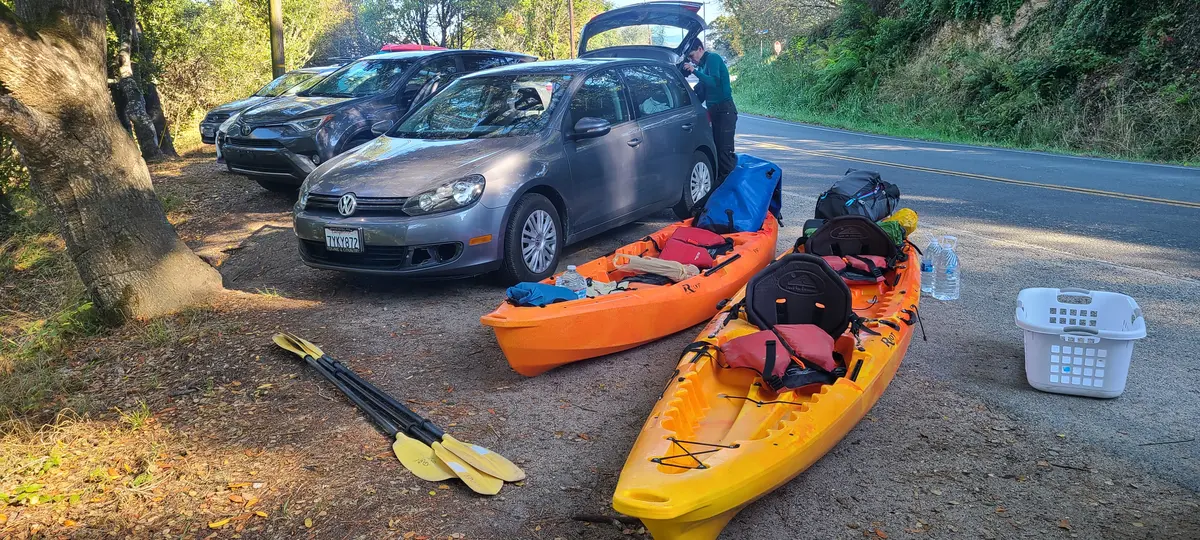
But, in planning this, I chickened out a bit. The group included people with variable kayaking experience and high afternoon winds can lead to large waves on the Bay, so we instead launched from Chicken Ranch Beach to the south, and paddled 5.29 miles along the shore so that there'd be an easy way to bail if things went wrong. This choice brought us into Type II Fun territory.
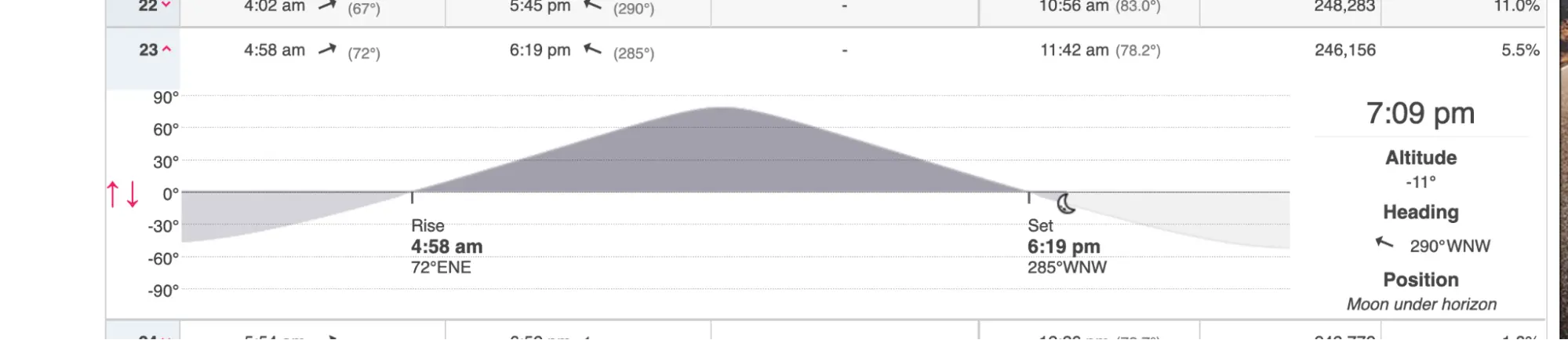
I chose the date to maximize darkness. Moonset on September 23 was at 6:19 PM — well before sunset — leaving the whole evening dark. (The bioluminescence night planner includes all this information in an easy-to-use form.)
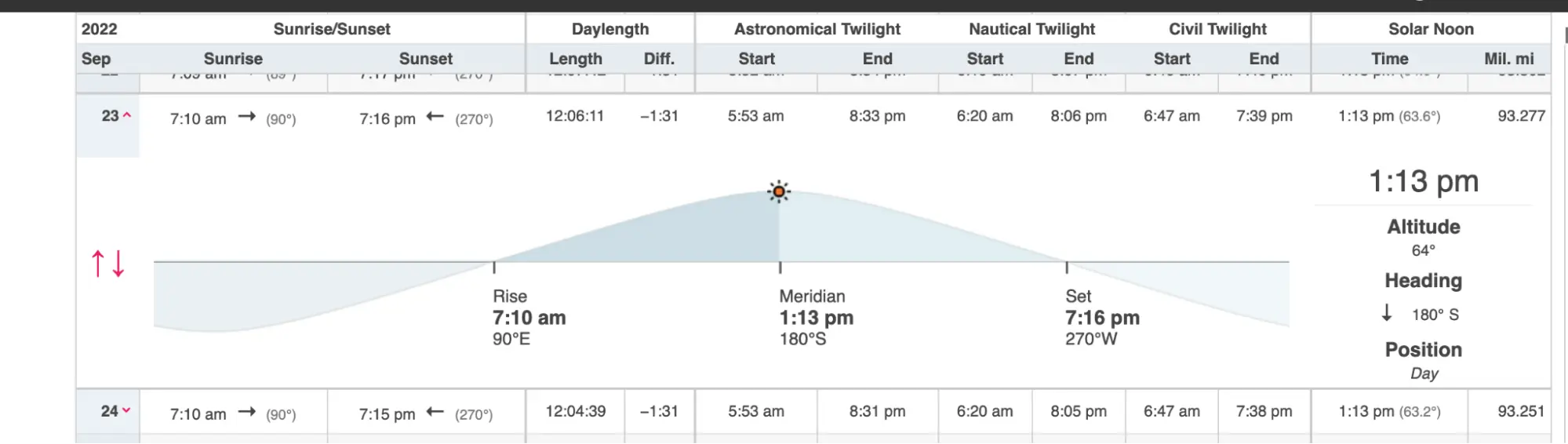
In addition, civil twilight ended at 7:39 PM, nautical twilight at 8:06 PM, and astronomical twilight at 8:33 PM.
Winds pick up in the afternoons so launching before noon is recommended and, in fact, local outfitters won't rent kayaks after noon even though winds tend to drop off again later in the day. Given the tide and light, starting around 4:00 PM during slack tide should have given enough time to paddle and set up camp before dark.
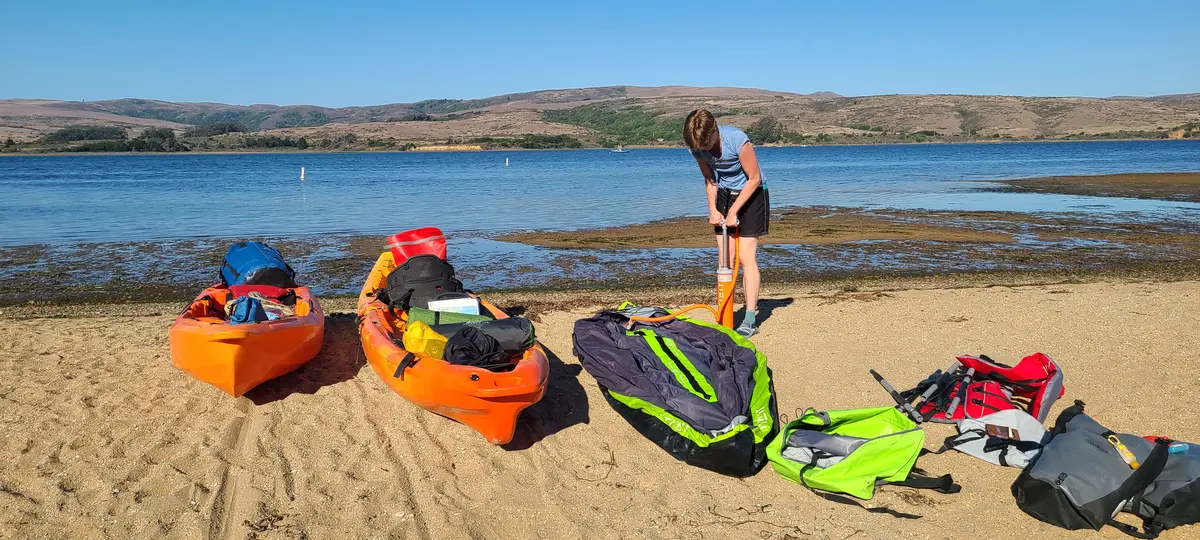
However, due to folks' work schedules, we weren't able to get onto the water until 5:12 PM (a vanguard from our group acquired the kayaks). This meant meant fighting the incoming tide that started at 5:53 PM on the 23rd. But not just the tide! Also that wind. The result was a brutal, soaking paddle. We got to camp at 7:17 PM, so the trip took about two hours.
On the way out we didn't time it much better and got on the water at 11:25 AM to fight the outgoing tide on our way back. The winds were calm and the paddling was much easier than the day before. We took it slow and arrived at 1:18 PM, so the trip took about two hours.
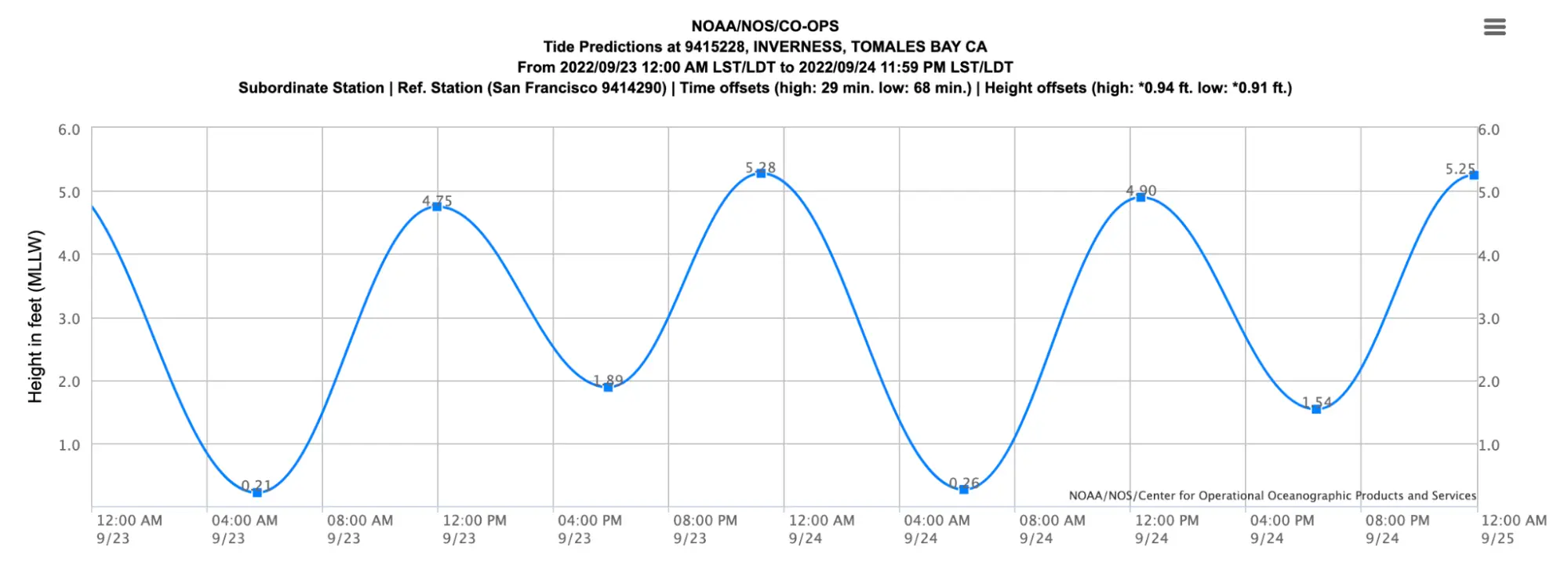
Most beaches on the west shore are tidally dependent and will disappear at tides above 5 ft. Since September 23 had a high tide of 5.28 ft at 11:11 PM, we needed to set up camp well above the waterline.
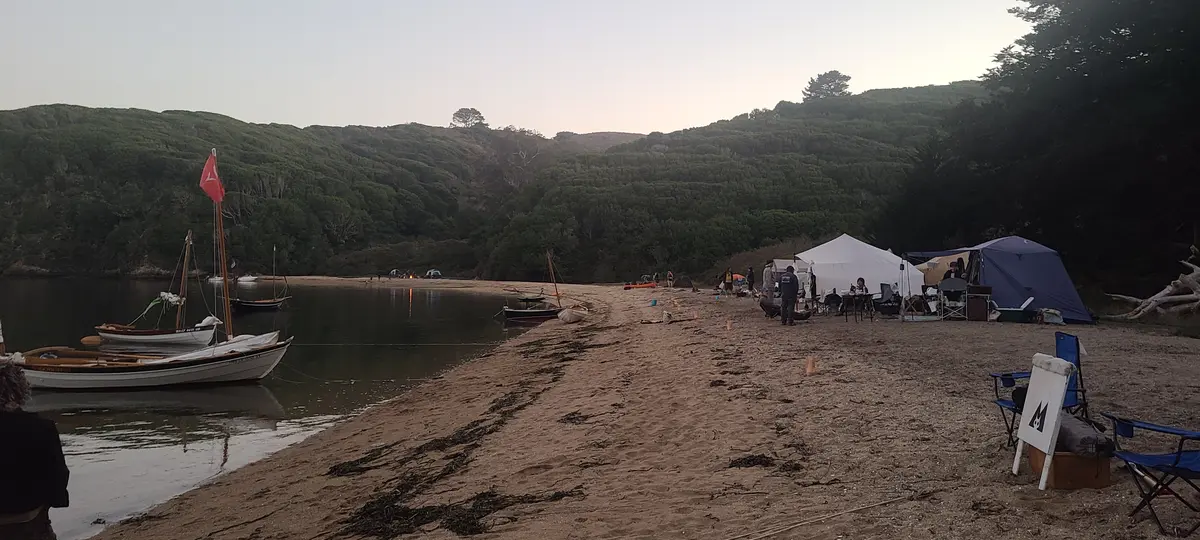
Cold and wet, some members of the trip retreated to tents immediately to get warm and no one was up for venturing back out again into the dark. The fabled bioluminescence didn't show itself in the bay near our tents.
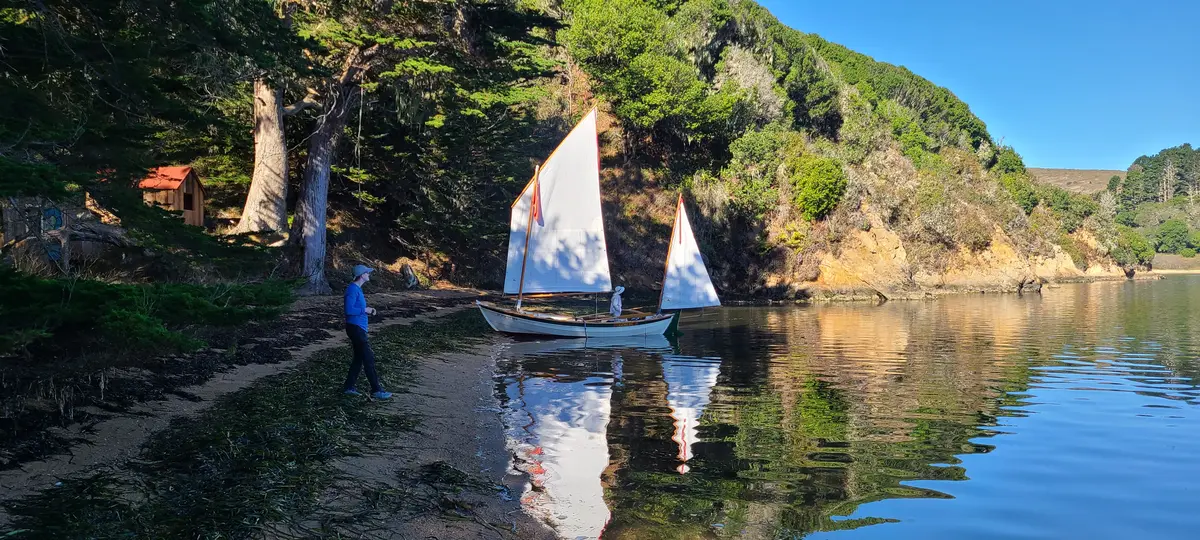
But the weekend wasn't a wash. Our visit corresponded with the annual campout of the Traditional Small Craft Association. They played folk music by their fire well into the night.
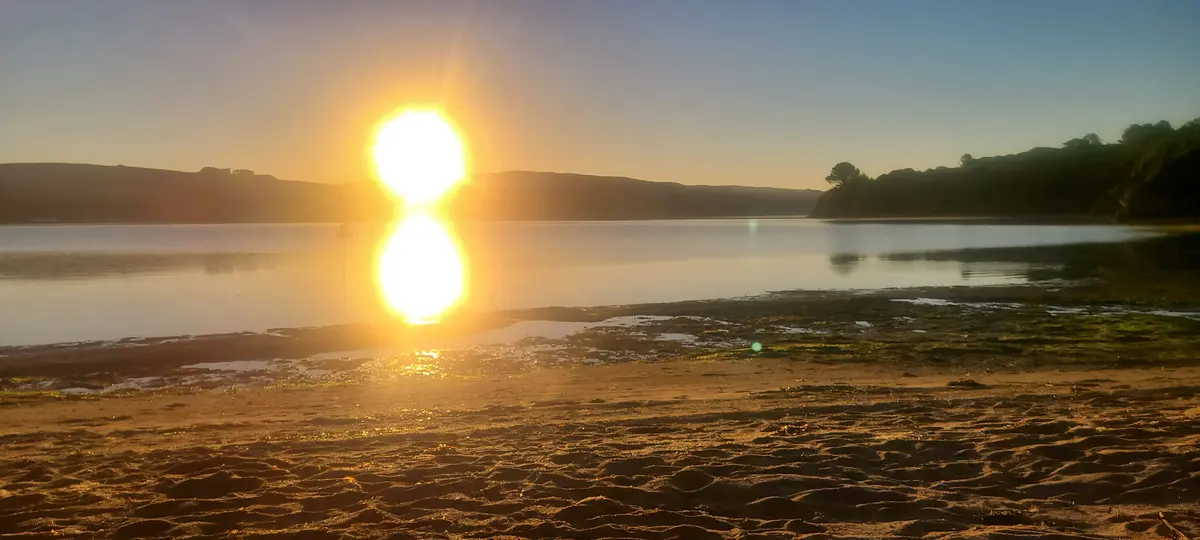
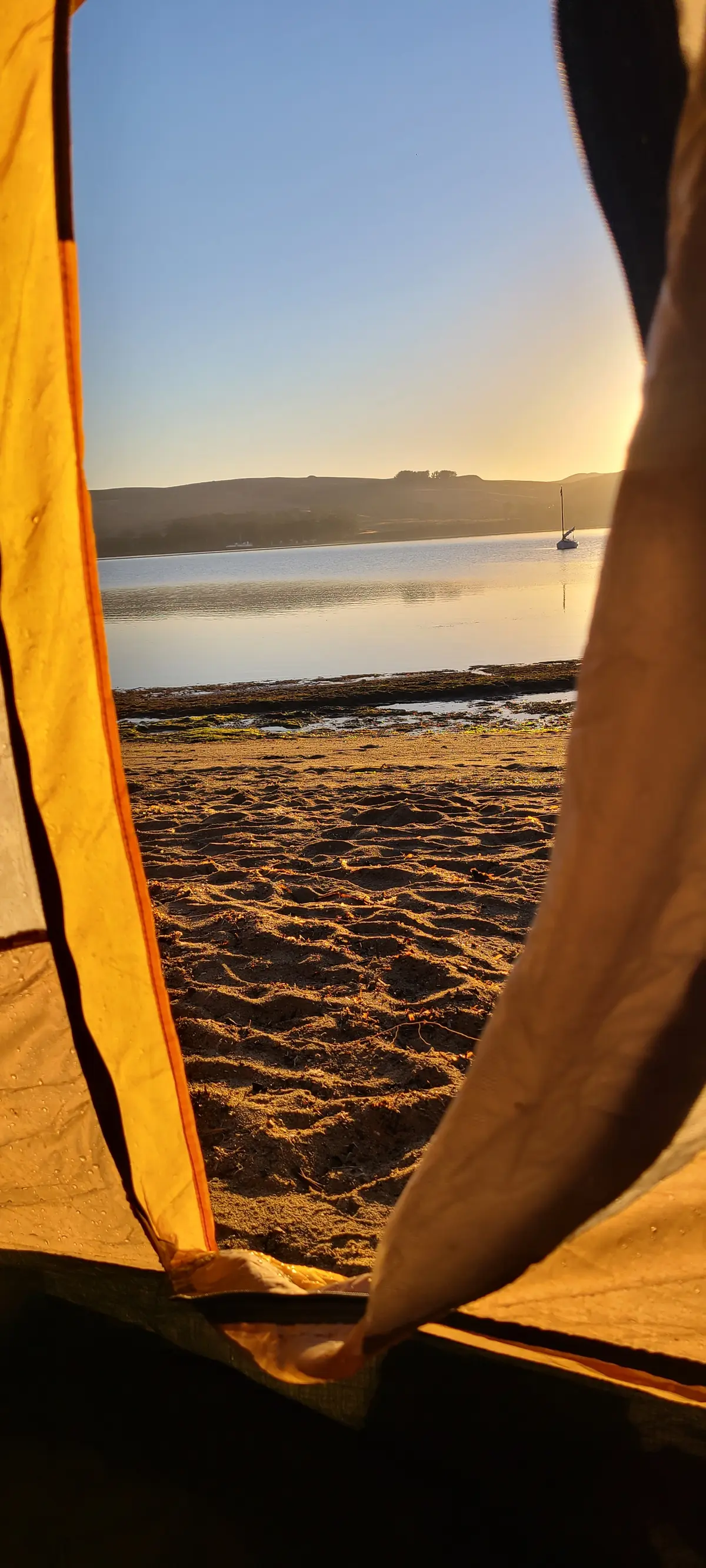
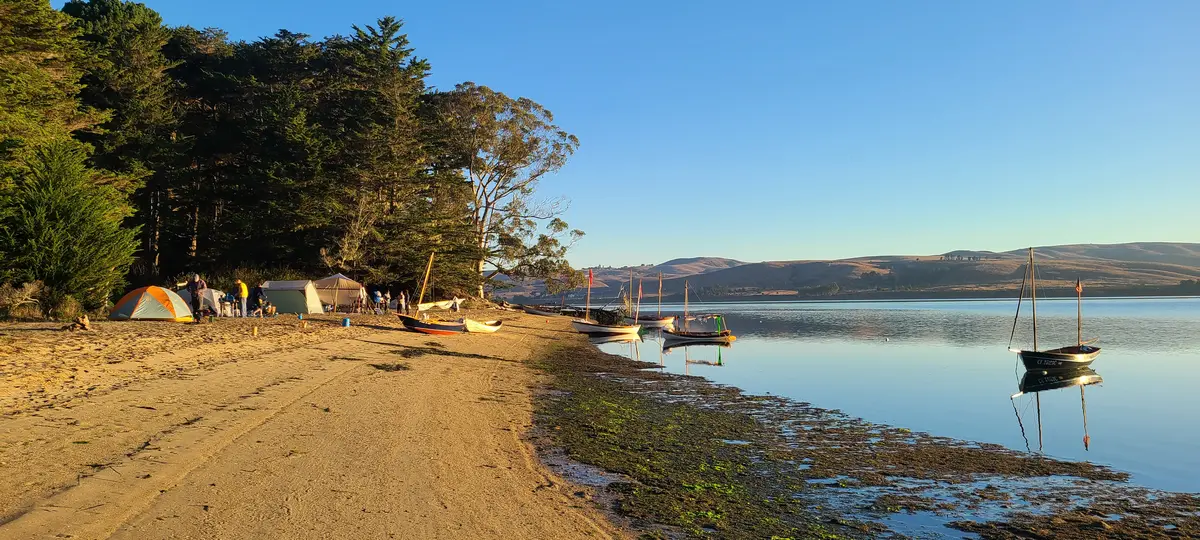
The next morning we went hiking up and around our mini-bay.
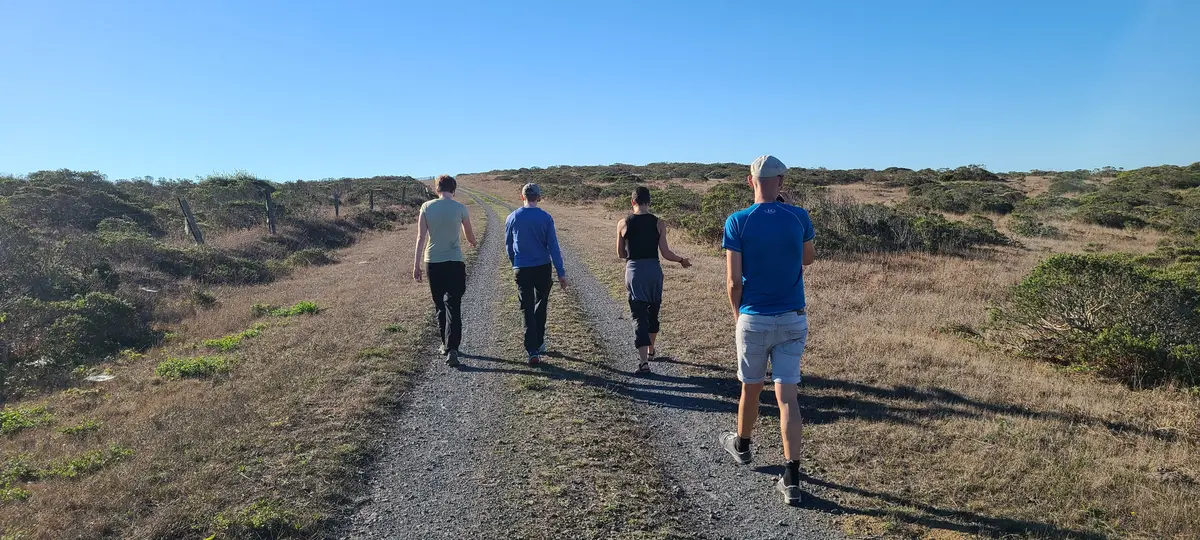
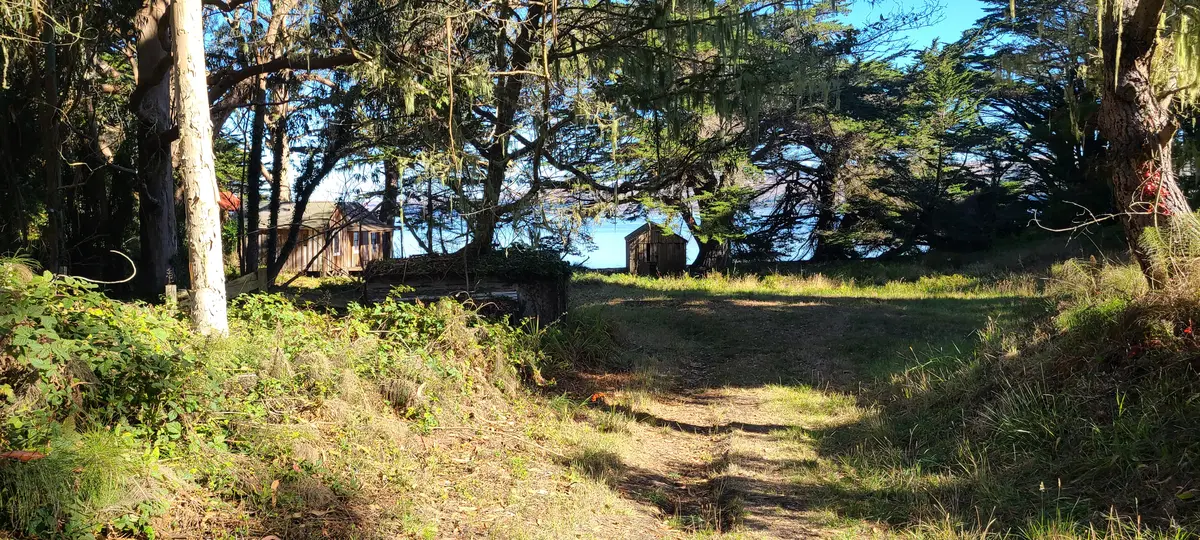
It took a while, so we investigated climbing across the cliffs to get back to camp.
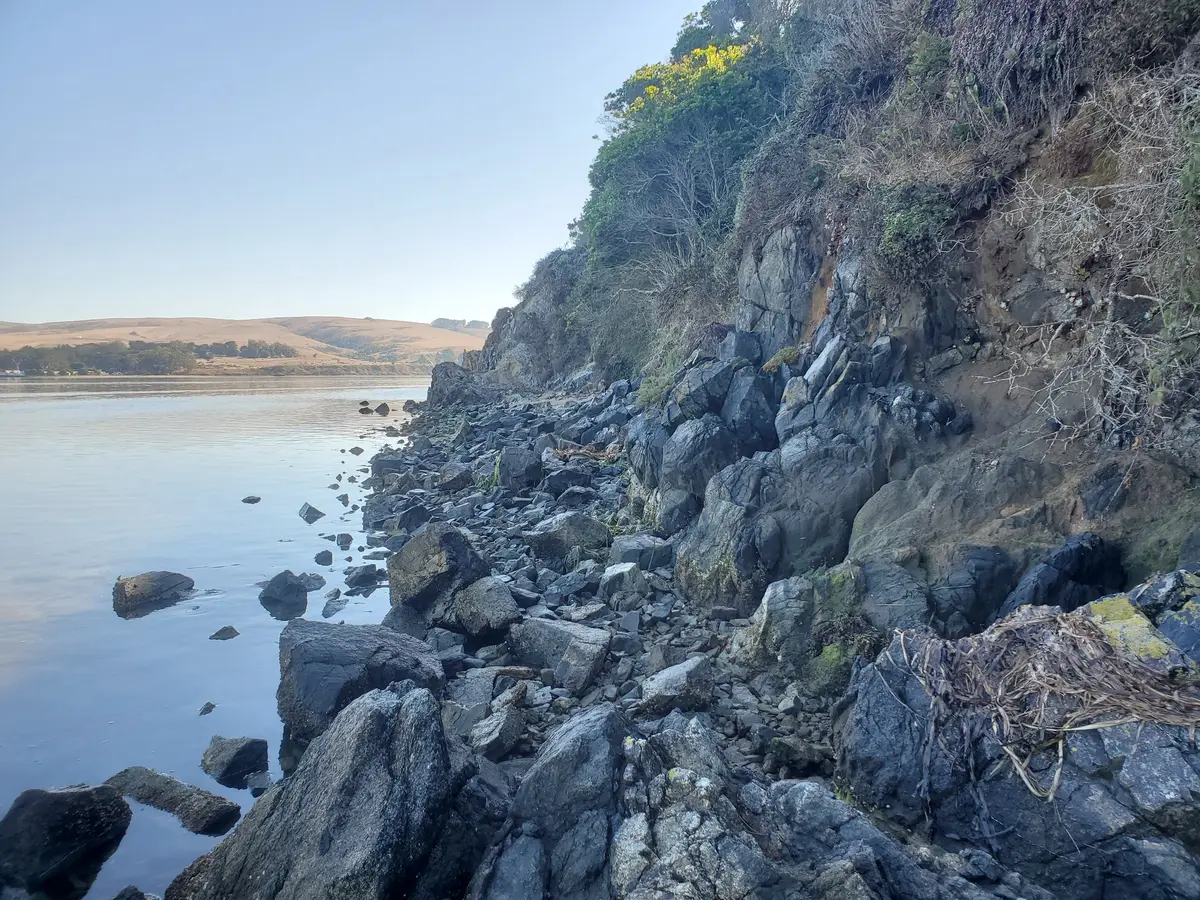
But were spared that adventure by the TCSA coming over in one of their boats!